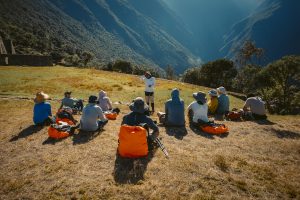

The Choquequirao Trek isn’t one of those routes that eases hikers into the experience. Oh no. From the very beginning, it makes its intentions clear. This is a long, demanding route through one of the most dramatic landscapes in the Andes, and it asks for one thing. Your full commitment.
Often compared to Machu Picchu (and sometimes called its sister city), Choquequirao feels very different. It’s harder to reach, far less visited, and deeply tied to the mountains around it. The trail makes its way through steep canyons, exposed slopes, and high ridgelines where silence is the norm and effort is ongoing.
Sure, it’s tough, and there are times when you might question your reasons for coming, but in the end, the rewards are worth it.
Below, we cover the moments that define the Choquequirao Trek. The sections that challenge the body, focus the mind, and stay with hikers long after the journey ends.
Table of Contents
The First Descent Into The Apurímac Canyon
When the scale of the trek becomes real.
The adventure begins with a steep descent into the Apurímac Canyon, and it doesn’t take long for the reality check of what lies ahead to kick in. From the top, the river below looks closer than it actually is. The canyon doesn’t look too bad, and the switchbacks look manageable. As you make your way down, that illusion disappears.
The sun gets stronger, the air gets warmer, and the canyon walls grow taller with every step. Knees start negotiating terms. Water breaks become more frequent. And somewhere along the way, the uncomfortable truth settles in. Yep, you guessed it. This entire descent will have to be climbed again later.
It’s a humbling start, and a very honest one.
Crossing The Apurímac River
The lowest point of the trek.
Reaching the Apurímac River feels like reaching the bottom of the world. The river moves fast and loud, slicing through the canyon with real force, as if to remind everyone who’s in charge here. Hint: it’s definitely not you.
This is usually the hottest point of the trek. There’s not a lot of shade, and the climb on the far side is impossible to miss, as you notice it rising steeply, without apology.
It’s not a long stop at the bottom, but it’s a memorable one. Feet feel sore, shoulders are tired, and the canyon walls tower overhead. Now, the trek suddenly feels very serious, even if spirits are still high (which they generally are).
The Climb To Marampata
Where time slows and legs do the talking.
If the Choquequirao Trek were ever to be defensive, this climb would be the reason.
The ascent from the river to Marampata is long, steep, and stubborn. Zigzag paths stack on top of zigzag paths, and progress is slow, no matter how strong or confident you felt at the start.
This is where hiking becomes simple in the least simple way possible. Step. Breathe. Step again. Conversations start to fade, and everyone finds their own rhythm, whether they like it or not. It’s the only way you’re getting back out of there.
It’s exhausting, yes, but it’s also strangely satisfying. There’s no rush, no shortcut, and no distraction. Just steady effort and the quiet satisfaction of moving forward.
The First View Of Choquequirao
A quiet kind of reward.
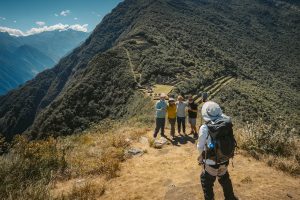
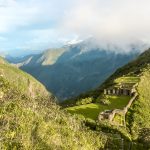
The first glimpse of Choquequirao doesn’t come with fanfare. There’s no dramatic lookout, no moment where everything suddenly comes into view. Instead, the ruins reveal themselves slowly. You spot a wall here, a terrace there, all half-hidden among trees and grass.
What stands out immediately is the silence. No crowds. No noise. Sometimes, no one else at all. Not another soul.
Despite the quiet, though, the site feels protected rather than abandoned, like it’s been waiting patiently for those willing to make the journey on foot.
Walking Through The Ruins
History built into the mountain.
Choquequirao stretches across steep mountainsides, its terraces and plazas carefully shaped to fit the land rather than destroy it. Many sections are still being uncovered today, which gives the whole place a slightly unfinished, lived-in feel.
One of the most striking features is the array of terraces decorated with stone llama figures, which are tiny details set into massive walls. They’re easy to miss, but unforgettable once seen.
Walking through the site, it’s hard not to think about the work it must have taken to build it. The location alone shows how important it was. Nothing here was placed by accident.
The Way Back
Same trail with a very different mindset.
The return journey takes you over familiar territory, but it feels different. The climbs are familiar now. The distances are known. Muscles are tired, but the uncertainty is gone. There are no more surprises ahead.
Descending once more into the Apurímac Canyon and climbing out again becomes a final test of endurance. It’s not dramatic this time. Instead, there’s just a quiet determination to keep going. It almost seems easier.
By the time the trek ends, there’s a quiet sense of completion. The trail has given everything it was going to give, and you gave back all you got. You feel proud. And so you should.
Why Choquequirao Leaves A Mark
The Choquequirao Trek isn’t intense because it’s technical or extreme. It’s intense because it asks hikers to slow down, work hard, and stay present day after day.
Between sheer dropping canyon walls and sacred mountain peaks, the trail leads to a place that still feels earned. Discovered. No shortcuts. No crowds. Just effort, silence, and a ruin that hasn’t lost its sense of mystery.
For those who take it on, Choquequirao isn’t just a destination. It’s a memory built step by step, and one that tends to stick around long after you remove your hiking boots.

Leave A Reply