
Some treks get you from Point A to Point B. Others change how you understand an entire civilization.
Take the route from Choquequirao to Machu Picchu, for example. This isn’t just a walk through the Andes. It’s a journey through the hidden secrets of the Inca Empire. A route that connects two extraordinary cities separated by cloud forest, deep canyons, winding trails, and centuries of mystery.
This isn’t the most famous trek in Peru. It’s something better.
It’s the trail that explains why Machu Picchu exists at all, and why Choquequirao may have been even more important than history books once suggested. Together, these two sites form the twin jewels of the Andes. One celebrated, one elusive, both absolutely mind-blowing.
And when you walk between them, step by step, ridge by ridge, something clicks. Let us take you there.
Table of Contents
Two Inca Cities, One Shared Story
On paper, Choquequirao and Machu Picchu look like siblings. They’re even known as “sister cities”. But in reality, they feel more like complementary halves of a bigger idea.
Both cities perch dramatically above roaring rivers. Both are built with astonishing stonework precision. Both are wrapped in mist, mystery, and mountain silence.
But where Machu Picchu became a global icon, Choquequirao remained hidden. It sat swallowed by the jungle, known mostly to condors and the occasional stubborn explorer.
The magic of this trek is that it doesn’t treat them as separate destinations. It restores the relationship between them. The Andes become the connective tissue. The trail becomes the missing chapter.
Choquequirao: The Lost Giant Of The Inca World
Choquequirao doesn’t merely announce itself upon your arrival.
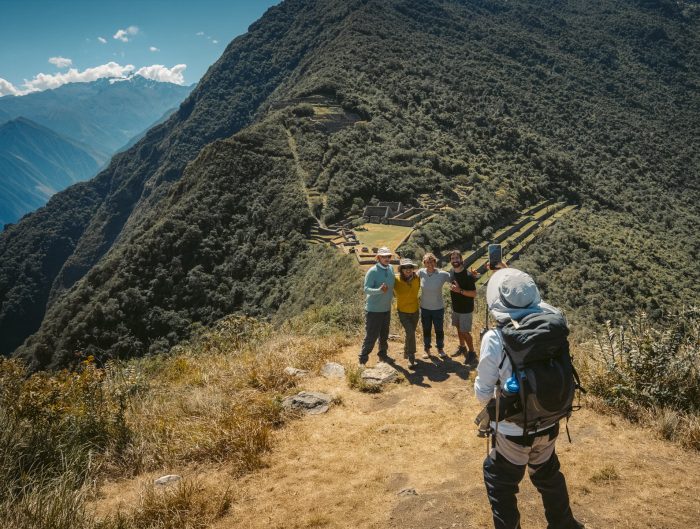
It rises from the Apurímac Canyon like a stone mirage. It’s massive, dramatic, and superbly remote. Reaching it takes effort. Leaving it takes reflection.
This wasn’t a small ceremonial outpost. In fact, it’s far bigger than its sister city.
Choquequirao sprawls across a mountainside, featuring plazas, temples, terraces, ceremonial platforms, and residential areas that hint at its significant political and religious importance. Some archaeologists believe it may have played a key role during the final resistance against the Spanish as a stronghold of defiance and continuity.
And yet, even today, only a fraction of the site has been excavated.
Standing here, surrounded by silence and condors circling overhead, it’s impossible not to feel like you’re standing inside an unfinished history book.
Machu Picchu: The Icon That Still Keeps Secrets
Machu Picchu may be world-famous, but the fame hasn’t solved its mysteries.
Why was it built here, balanced between mountains and sky? Who exactly lived here? Why was it abandoned so quickly?
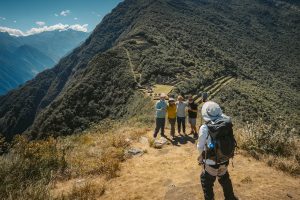
When you see it after days of trekking, rather than as a standalone stop on a busy trip, Machu Picchu feels different. More intentional. More connected. Less like a miracle dropped from the sky and more like the final, perfected expression of an Andean view of the world.
Walking into Machu Picchu after the Choquequirao route feels earned. It feels contextual. You don’t just see it, you understand it.
Why The Incas Built In The Middle Of Nowhere On Purpose
The Incas didn’t choose sites randomly. Every ridge, river, and valley mattered.
This trek reveals how deeply the empire understood geography, ecology, and symbolism. Sacred mountains weren’t just scenic; they were spiritual anchors. Rivers weren’t obstacles to cross; they were lifelines. Trails weren’t shortcuts; they were statements of power and connection.
The route between Choquequirao and Machu Picchu follows the ancient way of thinking: strategic viewpoints at high altitude, agricultural zones, and ceremonial landscapes woven together into one long, deliberate pathway.
In other words, the trail is the message.
A Trek That Feels Like Time Travel
One of the strangest but most joyful parts of this journey is how disconnected it feels from the modern world.
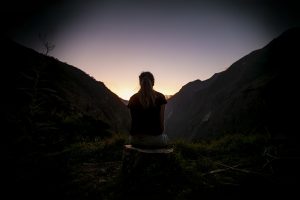
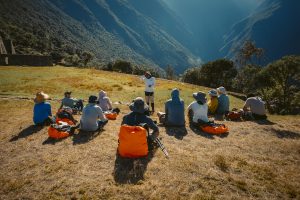
Days pass without roads. Without crowds. Without phone signals. Just mountains, rivers, stars, and wind.
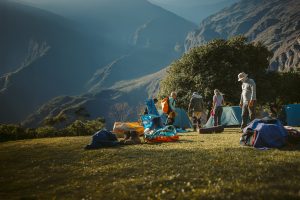
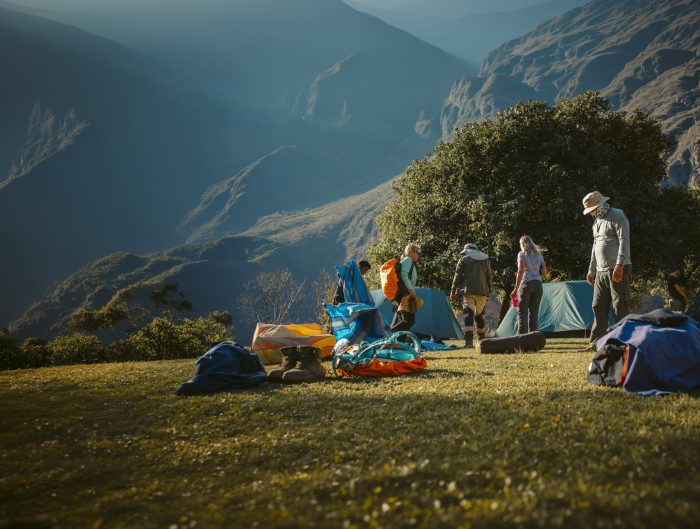
You cross high alpine passes dusted with snow. You descend into lush cloud forest buzzing with life. You camp beside rivers that once marked imperial boundaries.
Every day feels different. Every night feels earned.
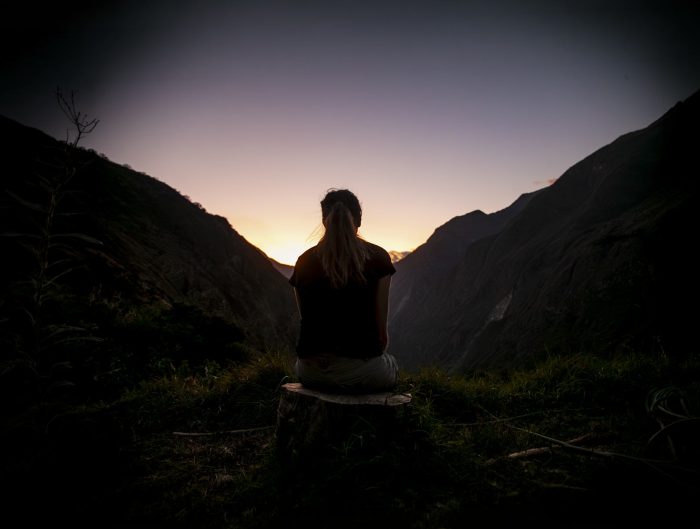
And slowly, almost without noticing, your pace changes. You stop rushing. You start listening. And the Andes do the rest.
Nature As Spectacular As The Archaeology
This isn’t a trek where archaeological ruins are the only stars of the show.
The landscapes themselves are insane. Along the way, you’ll see deep canyons carved by ancient rivers. Glaciers flowing off distant peaks. Orchids clinging to mossy cliffs. Condors soaring above like they invented flight.
The contrast along the way is constant. Expect icy mornings, warm afternoons, and misty evenings. Entering each environment feels like entering a different world that’s been stitched together with ancient paths.
It’s a reminder that the Incas didn’t build against nature, they built with it.
Why This Route Changes How You See Machu Picchu
Most people see Machu Picchu first. Most don’t ever make it to Choquequirao.
This trek flips the script.
By the time you arrive at Machu Picchu, you’ve already seen how ambitious the Incas were. How strategic. How comfortable they were building in impossible places. Machu Picchu no longer feels like a mystery, it feels like the logical, refined culmination of everything that came before it.
You understand the scale of their ambition. You respect the effort it took to hold an empire together. You appreciate the silence behind the stones.
And suddenly, Machu Picchu isn’t just beautiful. It’s meaningful.
A Journey For Travelers, Not Tourists
Let’s be honest: this isn’t a casual stroll.
This trek asks for patience, curiosity, and a sense of humor when the trail decides to make you climb at an almost 90 degree angle. But that’s exactly why it’s special.
It attracts people who want more than a check on their bucket list. People who enjoy long dinners under the stars. People who value stories over their next photo opportunity (although there’ll be plenty of those, too).
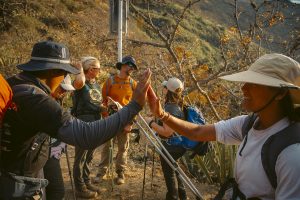
It’s a shared experience. A slow-burning adventure. One that bonds groups through challenge, awe, and the occasional muddy boot disaster.
Walking The Spine Of An Empire
The Inca Empire wasn’t just impressive because of what it built. It was impressive because of how it connected places.
This trek follows that connection. It’s not about ticking off two famous sites. It’s about understanding the space between them. The terrain they covered and mastered. The message they carried across the mountains.
You don’t just visit ruins. You follow decisions made centuries ago.
And when you finally arrive at Machu Picchu, tired, exhilarated, and slightly emotional, you realize something important: This was never about one city. It was always about the journey between them.
When Two Jewels Shine Brighter Together
Choquequirao and Machu Picchu are extraordinary on their own. There’s no denying that.
But together, they tell a deeper story of ambition, belief, resilience, and connection.
The trek between them doesn’t rush that story. It lets it unfold naturally, one step at a time, across some of the wildest terrain in the Andes.
And once you’ve walked it, the Andes never look the same again.
Some journeys are meant to be rushed. This one is meant to be felt.

Leave A Reply