
Some treks are beautiful. Some are challenging. And then there are routes that feel like they mean something.
The journey that links Choquequirao and Machu Picchu is one of those rare adventures that blends epic hiking with plenty of history, living culture, and a serious sense of awe. Some call this alignment the Great Spiritual Axis of the Andes, and once you walk this trail, the name makes perfect sense.
This isn’t just a hike. It’s a story told in mountains, stone, and sky.
Table of Contents
What Is The Great Spiritual Axis Of The Andes?
In simple terms, the Great Spiritual Axis is the deep, ancient connection the Andean people have with the surrounding mountains and the earth, conceptualized on pathways between two of the most important Inca cities ever built.
Choquequirao sits to the west, massive and wild. Machu Picchu rises to the east, clean cut and iconic.
Between them stretches a network of sacred valleys, snowy peaks, cloud forests, and high passes that the Incas believed were charged with spiritual energy. Walking this route isn’t about ticking off ruins, although you’ll get plenty of chances to do so. It’s about following a path the Incas designed with intention.
And yes, your legs will feel that intention too.
The Role Of Apus: The Mountains As Living Beings
In Andean belief, mountains aren’t just scenery. They’re called Apus, and are seen as powerful spirits that protect the land and the people around them.
Along the Choquequirao to Machu Picchu route, you’re constantly surrounded by towering peaks that the Incas respected and worshipped. Every major mountain pass, valley, and glacier had meaning. Offerings were made. Ceremonies were held. Routes were chosen carefully.
When you’re struggling uphill with a massive snow-capped peak watching over you, it’s easy to understand why the Incas believed these mountains were alive.
Why Choquequirao Comes First (And Why That Matters)
Choquequirao is often called Machu Picchu’s “sister city,” but that doesn’t quite do it justice. It almost belittles its true nature in a way.
This site is bigger, wilder, and far less visited. You’ll find huge terraces all the way down steep mountainsides, ceremonial spaces, and an almost eerie quiet that makes it feel like the city is still asleep.
This being the starting point matters because Choquequirao represents preparation.
This is where the journey begins, and you should expect:
- Fewer people
- Raw landscapes
- Big climbs
- Lots of focus
By the time you leave Choquequirao behind, you’re not just physically warmed up; you’re tuned in to your surroundings and what lies ahead.
The Journey Between The Cities: Where The Magic Happens
The stretch between Choquequirao and Machu Picchu is where this route earns its legendary status. Think:
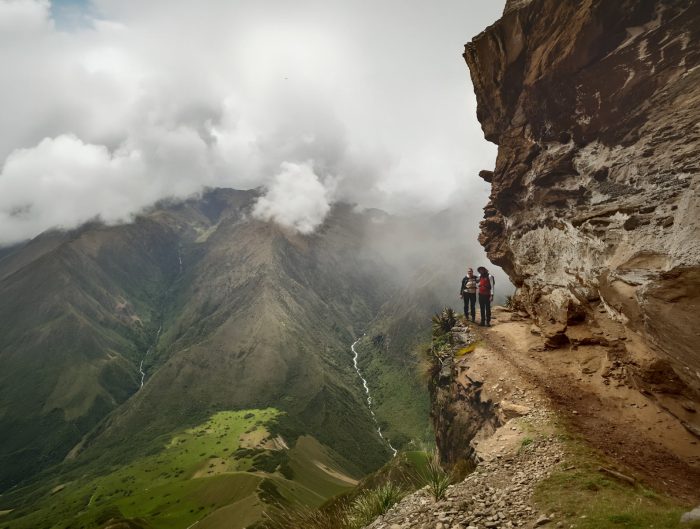
- High Andean passes with views so impressive you’ll stop conversations mid-sentence
- Remote villages where life has barely changed in centuries
- Glacial peaks towering overhead
- Long days that feel tough but are wildly rewarding
This isn’t a trail you rush. The slow pace is the point. Each valley you cross feels like turning a page in a very old book.
Somewhere out there, usually on a pass when the wind hits just right, it clicks. You’re not just hiking through the Andes. You’re part of them, at least for a while.
Machu Picchu As The Grand Finale
Arriving at Machu Picchu after days on the trail hits differently. It’s not like when you visit for a day out on the train.
Instead of shock and hundreds of photos, there’s recognition.
You’ve already seen how the Inca lived, farmed, worshipped, and moved through the mountains. Machu Picchu becomes the final chapter, not the whole story.
It’s polished where Choquequirao is raw. Refined where the trail was rugged. And after everything that comes before it, the city feels less like a tourist stop and more like a reward you genuinely earned.
How This Trek Changes From Day To Day
One of the best things about this route? It never gets boring. Never.
Over the course of the trek, you make your way through:
- Dry Andean valleys
- High alpine terrain
- Cloud forest
- Lush jungle landscapes
That’s a lot of different ecosystems.
Temperatures shift. Views change. Even the air smells different. Each day feels like a new chapter, which makes the journey fly by (even though your legs may disagree).
Why This Route Was Never Meant To Be Easy
The Incas didn’t build sacred paths for convenience or to enjoy the pretty views.
Steep climbs, long distances, and high passes were intentional. Difficulty was part of the experience and was proof of commitment, strength, and respect. This is one reason the Choquequirao to Machu Picchu route feels so powerful today.
It challenges you, yes. But it also rewards you with solitude, scale, and a deep sense of achievement that shorter routes simply can’t match.
Hard work means a big payoff.
Who This Route Is Perfect For
This trek isn’t for everyone, and that’s exactly why it’s special.
It’s perfect for:
- Hikers who want more than the “classic” experience in Peru
- Travelers who enjoy quiet trails and big challenges
- People who love history but want an immersive experience rather than museums
- Anyone who believes the journey should be as powerful as the final destination
If the idea of working hard for something unforgettable sounds appealing, this route delivers in a big way.
The Silence Factor: A Rare Luxury In Peru
Machu Picchu is famous, and as a result, it gets very busy. Choquequirao and the connecting trail? Not so much.
Long stretches of this route are quiet in a way that’s hard to find anywhere else in Peru. No crowds. No noise. Just wind, footsteps, and the occasional llama giving you side-eye.
That silence creates space to slow down, reflect, and really absorb where you are. It’s one of the most underrated parts of the experience.
When Is The Best Time To Walk The Spiritual Axis?
Timing matters here.
The dry season (May to September) offers clearer skies and safer mountain crossings, while the shoulder months (April and October) bring greener landscapes and fewer trekkers. Rainy months are trickier, but reward those who don’t mind a little mud with dramatic clouds and lush views.
The key is choosing the right window and the right equipment for the weather, so the journey stays challenging in a good way, not a miserable one.
Why This Is A Route Worth Doing Properly
This isn’t the kind of trek you want to rush, shortcut, or wing.
Logistics are complex. Distances are real. And the landscape deserves respect. Doing it properly means:
- Well-planned pacing
- Knowledgeable guides who understand both history and terrain
- Good food (yes, that matters more than people might think)
- And the freedom to focus on the experience instead of the details
When everything flows smoothly, the trail opens up in a way that’s hard to describe but impossible to forget.
Is This Trek Right For You? A Quick Reality Check
This route is incredible, but it’s not a casual stroll in the park.
You’ll enjoy it most if you:
- Are comfortable hiking multiple days in a row
- Don’t mind early mornings and big climbs
- Like being off-grid for a while (yep, no wifi out here)
- Want a challenge that feels meaningful, not rushed
If that sounds like your kind of adventure, you’re already halfway there.
More Than Any Old Trek
The Choquequirao to Machu Picchu route isn’t about bragging rights or checking stuff off your bucket list. It’s about connection to the mountains, the past, and maybe even yourself (yep, it’s true).
If you’re looking for an Andean adventure that goes deeper than the “regular” trips, lasts longer in your memory, and feels genuinely meaningful, this is the one.
And once you start imagining yourself on that trail? Well, that’s usually when it’s time to stop dreaming and start planning.

Leave A Reply