
High in the Andes, far from the crowds, the souvenir stalls, and the well-worn paths of history, Choquequirao sits quietly doing what it’s always done best: refusing to surrender.
This isn’t the Inca site that appears on all the postcards. It doesn’t have trains rolling in every hour or a timetable that comfortably fits into a day trip. Choquequirao makes you work for it. And that’s exactly the point.
Long before it became the focus of one of South America’s most demanding treks, Choquequirao was a place of last stands, stubborn survival, and strategic retreat.
To understand why this remote city became a refuge of imperial resistance, you need to understand what was happening when the Inca world began to fracture, and why disappearing into the mountains made perfect sense.
Below, we share the legacy of the last Incas and why Choquequirao played such an important role in imperial resistance.
Table of Contents
When An Empire Started To Crack
At its height, the Inca Empire was enormous. Roads pieced together deserts, jungles, and mountain passes. Storehouses fed armies. Messengers ran faster than most people drive today (no joke). It was an empire built on logistics, discipline, and a deep understanding of tough terrain.
Then the Spanish arrived.
Disease struck first, specifically smallpox, tearing through communities before conquistadors even showed up. Civil war followed, weakening leadership and dividing loyalties. When Spanish forces finally marched inland, they didn’t face a unified empire. They faced a system already under pressure.
Despite all this, the Inca response wasn’t surrender. It was adaptation.
Some cities fell. Others were abandoned deliberately. And some, like Choquequirao, became something else entirely.
Choquequirao’s Location Wasn’t An Accident
If you were designing a hideout for an empire on the run, you’d choose somewhere like this.
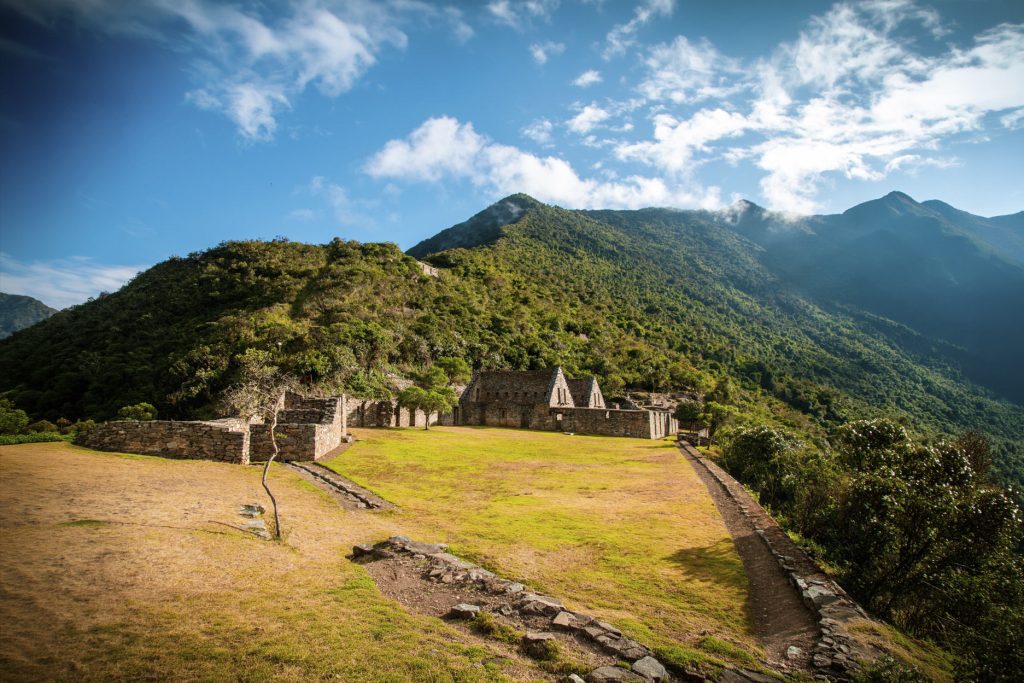
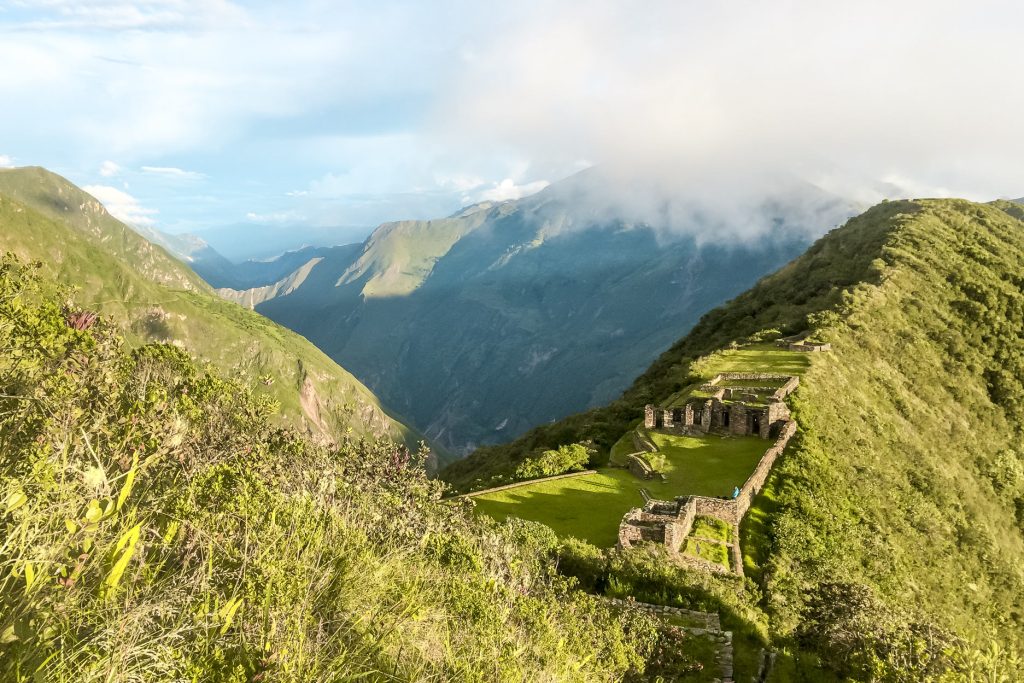
Choquequirao clings to a ridge above the Apurímac River canyon, one of the deepest in the Andes (and the world in fact). On either side, it has steep drops, thick vegetation, and weather that changes its mood hourly. Access is limited. Visibility is excellent. Escape routes are built into the landscape.
From a defensive point of view, it’s brilliant. From an invader’s perspective, it’s a logistical nightmare.
This wasn’t a ceremonial city meant to impress visitors. It was practical, strategic, and discreet. It could be supplied quietly. It could be defended with relatively small numbers. And crucially, it could disappear into cloud and forest when needed.
More Than A City: A Strategic Stronghold
Choquequirao wasn’t just a place to hide. It was a functioning center of resistance.
Evidence suggests it played a role in maintaining Inca governance after Cusco fell. Religious practices continued. Agricultural terraces were still used. Roads connected it to other remote settlements that formed a network of resistance in the Vilcabamba region, the last refuge of the Incas before their empire was destroyed.
This wasn’t chaos. It was organized withdrawal. Think less “lost city” and more “mountain headquarters.”
From here, the Incas could regroup, communicate, and plan. They could preserve traditions and authority even as Spanish control spread elsewhere. Choquequirao represented continuity and was a statement that the empire wasn’t gone, just out of reach.
Why The Spanish Never Took It
Here’s the part that tends to get overlooked: the Spanish didn’t conquer everything.
Some places simply weren’t worth the effort and were never “discovered”.
Reaching Choquequirao requires a long descent into the canyon and an even longer climb out. Supply lines would have been exposed. Horses would seriously struggle. Local knowledge favored defenders. For an army already stretched thin, chasing resistance into this terrain made little sense.
Instead, the Spanish focused on controlling easier routes, major population centers, and resources.
Choquequirao survived because it was inconvenient. And sometimes, inconvenience is the strongest defense there is.
A City That Chose Disappearance Over Defeat
At some point, Choquequirao was abandoned. Not invaded. Not destroyed. Simply left behind.
This wasn’t failure. It was strategy.
By withdrawing deeper into the Andes, Inca resistance became harder to trace, harder to suppress, and harder to erase. The forest reclaimed stonework. Paths vanished. The city slipped out of written history (or never even made it into it, as far as Spanish books from the time would show).
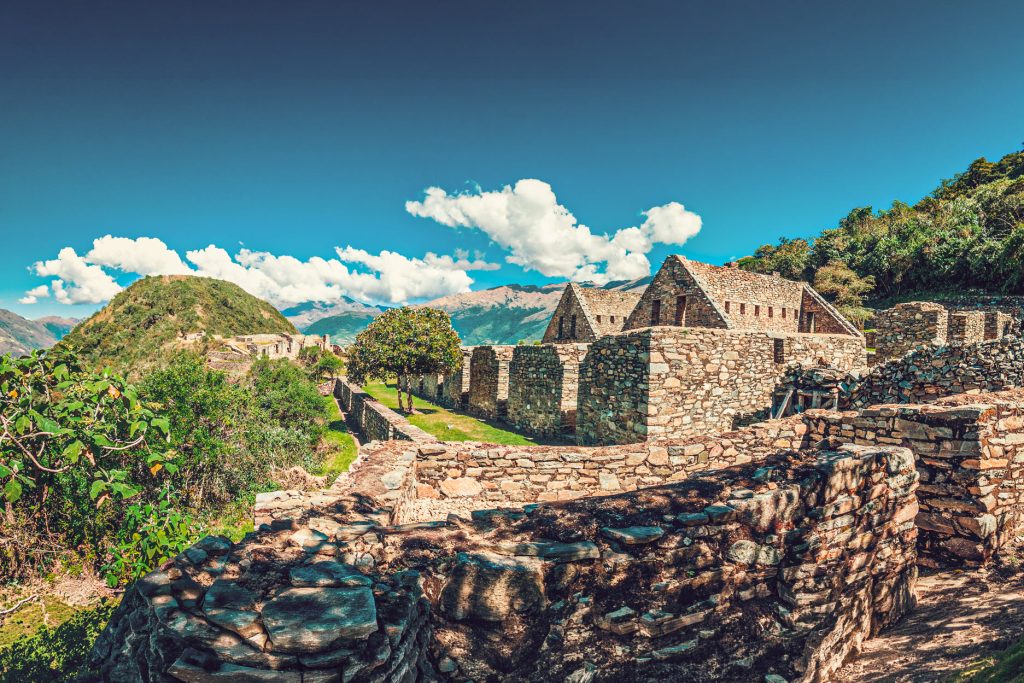
For centuries, Choquequirao remained largely untouched. No colonial churches built on top. No roads carved through its plazas. What was left behind stayed remarkably intact.
The result? A place that feels less like a ruin and more like someone hit the pause button on history.
Walking Through Resistance Today
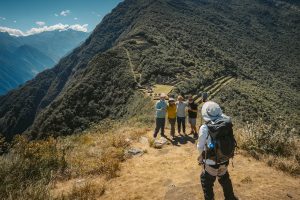
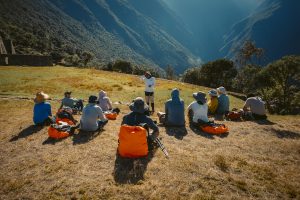
Visiting Choquequirao isn’t about ticking off another archaeological site. It’s about immersion. Into the landscape. Into the land of the Incas. Into history itself.
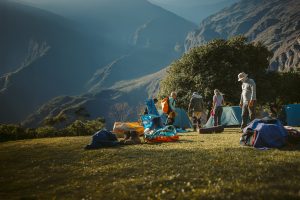
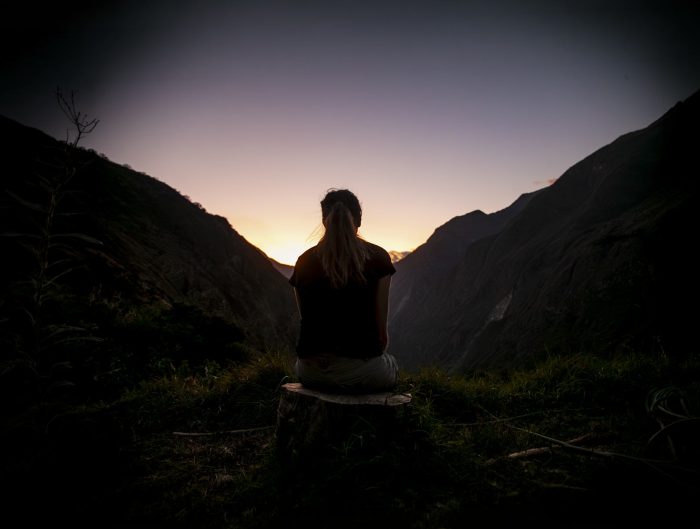
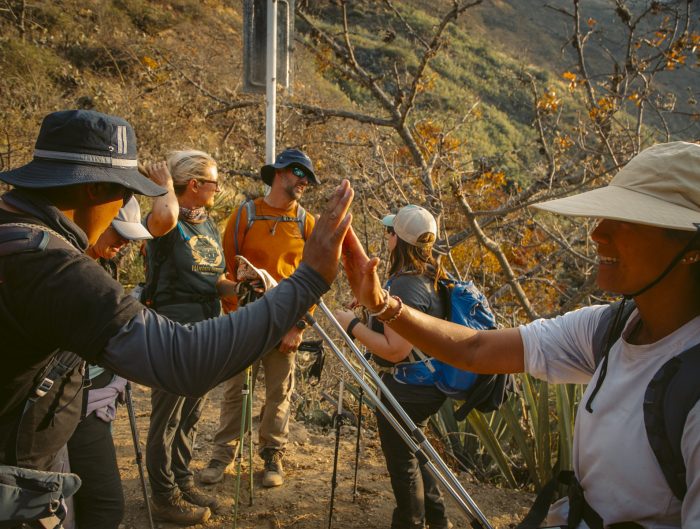
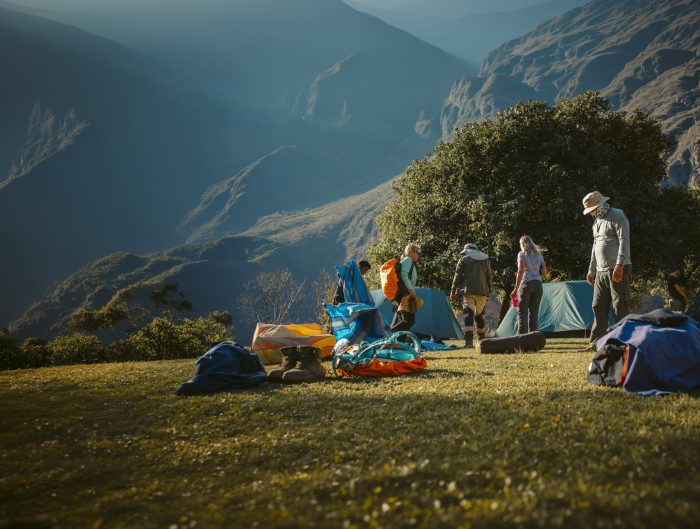
The trek is part of the story. Long days. Big elevation changes. Quiet camps. You earn every view, every terrace, every sunlit wall emerging from the trees.
There are no crowds to follow. No ropes telling you where to stand. Just scale, silence, and the sense that this place still hasn’t fully revealed itself. In fact, only 30-40% has been uncovered, and the rest remains hidden by the jungle.
And that effort creates connection. When you finally step into the main plaza, the history hits differently. You don’t just see resistance, you feel why it worked.
Why Choquequirao Still Matters
Choquequirao matters because it challenges how we think about history.
It reminds us that empires don’t always fall in dramatic final battles. Sometimes they retreat. Sometimes they adapt. Sometimes they choose survival over spectacle.
It also matters because it asks something of you, the traveler.
This isn’t simple sightseeing. It’s participation. It’s commitment. And in return, it offers something increasingly rare: space, authenticity, and a story that hasn’t been diluted for convenience.
The Quiet Pull Of The Andes
There’s a reason more people are starting to look beyond the obvious routes.
Choquequirao isn’t trying to compete with better-known sites. It doesn’t need to. Its power lies in what it represents and what it demands.
For those willing to go further, walk longer, and lean into the discomfort, this trek offers more than scenery. It offers perspective.
And somewhere between the canyon floor and the cloud-covered ruins, it becomes clear why the last Incas chose this place to resist, endure, and quietly outlast history itself.
If a journey like that sounds tempting, the Choquequirao Trek is ready for you. Strap on your hiking boots and head on over to Peru. The legacy of the last Incas is waiting for you to discover its secrets.

Leave A Reply