
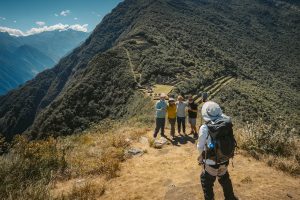

Choquequirao is big. And we’re not talking “that’s impressive” big, but why-on-earth-did-they-build-this-here big. Entire hillsides have been reshaped into terraces. Stairways slice through near-vertical slopes. Plazas sit where logic says nothing should stand at all.
Hidden deep in the Andes, Choquequirao isn’t just another Inca ruin. It’s a masterclass in control, belief, and ambition. Choquequirao architecture had something to prove. Every stone had a job. Every level carried meaning. Nothing was placed randomly, and nothing was built just to look good.
Once you stop seeing Choquequirao as a collection of ruins and start seeing it as a carefully engineered statement about power, nature, and the universe, the whole thing clicks into place. The terraces stop being scenic. The layout stops being confusing. And suddenly, you’re not looking at ruins but at an entire view of the world carved into a mountain.
Join us as we take a closer look at the architecture of such a marvel and what it all really means.
Table of Contents
Where Architecture And Landscape Become One
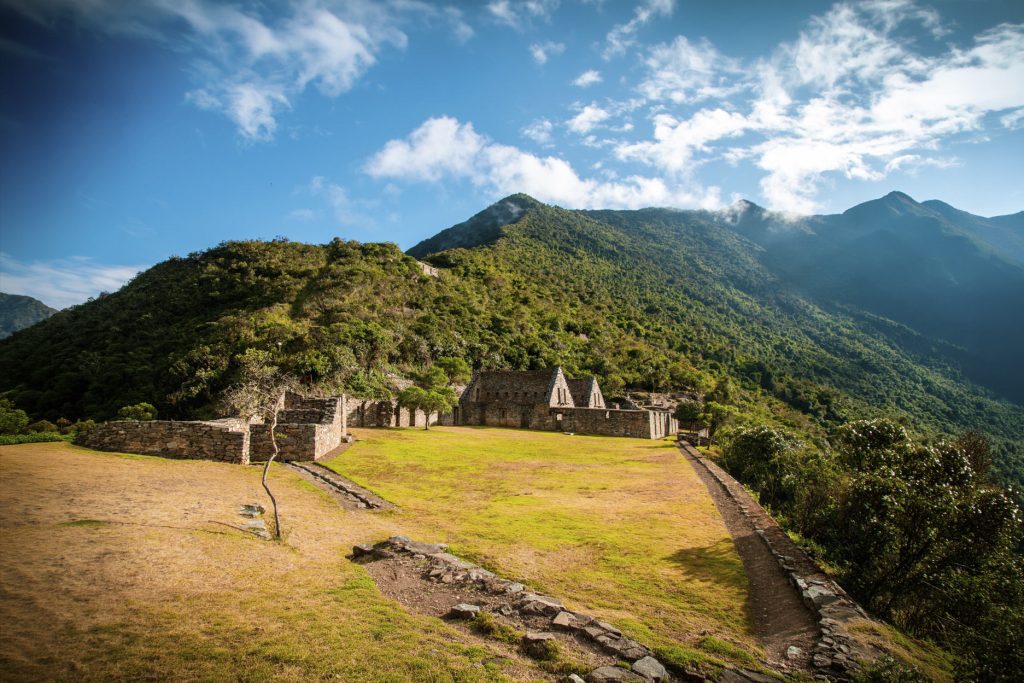
Choquequirao wasn’t designed on a flat surface and then dropped onto a mountain. It was planned with the mountain in mind from the start. The builders worked around ridges, slopes, and drops instead of trying to erase them, and the result is a site that feels locked into the terrain rather than imposed on it.
Buildings follow the natural lines of the land. Terraces spill down steep hillsides in long, deliberate sequences. Paths curve and climb instead of cutting straight through. Nothing here is accidental, but nothing feels forced either. The architecture responds to the landscape rather than fighting it.
This approach wasn’t just practical. It was philosophical. In Andean belief, mountains were powerful beings known as Apus, not empty backdrops. You didn’t conquer them; you negotiated with them. Choquequirao’s layout reflects that mindset clearly. The site holds its ground without trying to dominate it, turning the natural world into part of the design instead of a problem to be solved.
Terraces: More Than Farming Platforms
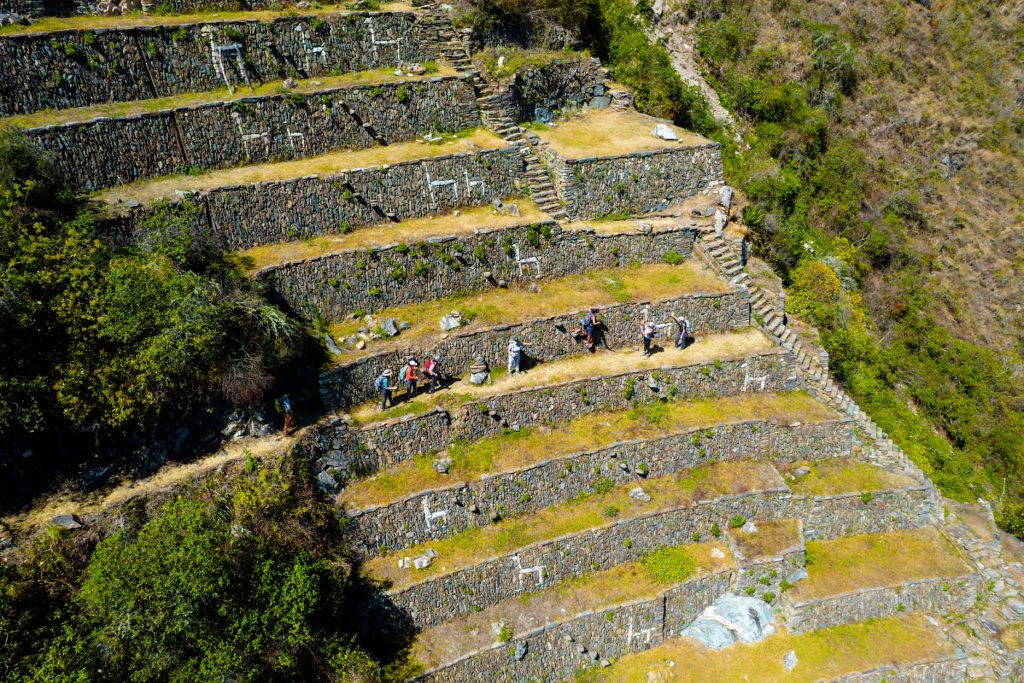
Yes, Choquequirao has agricultural terraces. Hundreds of them. But calling them “farming platforms” is like calling a cathedral “a nice room with chairs.”
These terraces served multiple roles:
- Food Production: Different elevations created microclimates, allowing diverse crops to grow.
- Erosion Control: On slopes this steep, terraces were essential to keep the structure intact.
- Symbolic Order: Terraces visually expressed harmony, hierarchy, and control over chaos.
When you look across the site, the repeating horizontal lines create rhythm and are almost hypnotic. This was intentional. Order mattered. Symmetry mattered. The act of shaping land was sacred.
The Llama Terraces: Stone Art With Meaning
One of Choquequirao’s most talked-about features is the white stone llamas.
Embedded into stone retaining walls on terraces are white quartz figures shaped like the camelids, arranged in procession. These aren’t carvings slapped on for decoration. They’re inlaid into the structure itself.
Why llamas?
Because llamas held great significance to the Incas. Transport. Wool. Food. Ritual offerings. Economic backbone. Spiritual symbol.
The placement matters too. These terraces face the Apurímac River far below, possibly symbolizing offerings descending to the underworld or moving between worlds.
Urban Planning With A Cosmic Map In Mind
Choquequirao isn’t randomly organized, we’ve already established that. Its sectors follow Andean concepts of space and duality.
The Incas divided the world into complementary halves. Hanan was the upper world and Hurin the lower.
This wasn’t about good versus bad. It was about balance. Male and female. Sky and earth. Light and shadow.
At Choquequirao, higher ceremonial areas contrast with lower residential and agricultural zones. Pathways connect these spaces deliberately, guiding movement and ritual flow.
Even the orientation of buildings aligns with solar events and sacred peaks. This was a society that tracked time through sunlight, shadow, and stone.
Stairs, Doorways, And The Art Of Controlinc
Nothing at Choquequirao was made large for convenience. Staircases are steep. Doorways are narrow. Turns are sharp. This wasn’t poor planning. It was intentional.
Architecture controlled how people moved, paused, and gathered. Narrow entrances slowed traffic. Elevated platforms created authority. Restricted access reinforced social structure.
Water As Architecture, Not Utility
Choquequirao’s water channels deserve more attention than you might want to give them initially. Natural springs were captured, redirected, and shared through finely cut stone canals.
Water wasn’t hidden underground. It was displayed.
Flowing water symbolized life, continuity, and the connection between realms. By integrating water channels into plazas and residential zones, the Incas turned daily routines into quiet rituals. Washing, drinking, and gathering all happened in unison with movement and sound.
This is architecture that engages the senses, not just the eyes.
Stonework That Prioritizes Purpose Over Perfection
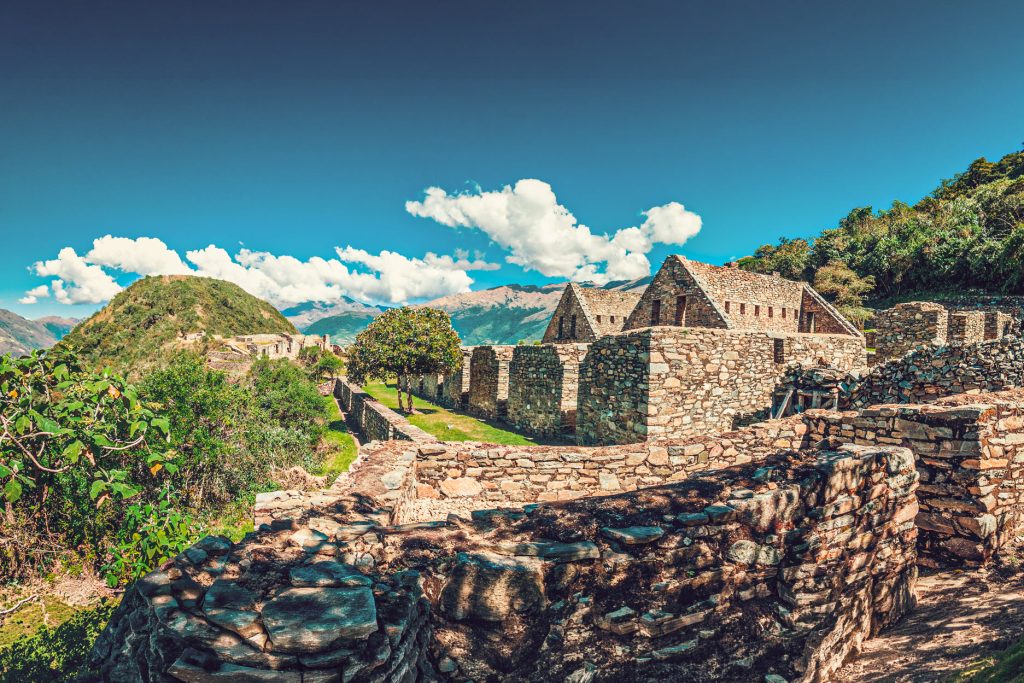
Unlike many locations in the city of Cusco, Choquequirao doesn’t obsess over flawless stone joints everywhere. Some walls are finely cut. Others are rough. But that’s not inconsistency, it’s strategy.
Precision was reserved for places of importance. Ceremonial buildings, temples, and elite spaces received the cleanest stonework. Supporting walls and terraces were more focused on strength and getting them up quickly.
Inca builders knew exactly where effort mattered most. The result is a site that feels practical, powerful, and deeply intentional.
Why Choquequirao Feels Different When You’re There
There’s something about Choquequirao that doesn’t translate through photos or diagrams. The scale. The silence. The way the site unfolds slowly as you move through it.
You don’t arrive at Choquequirao. You enter it.
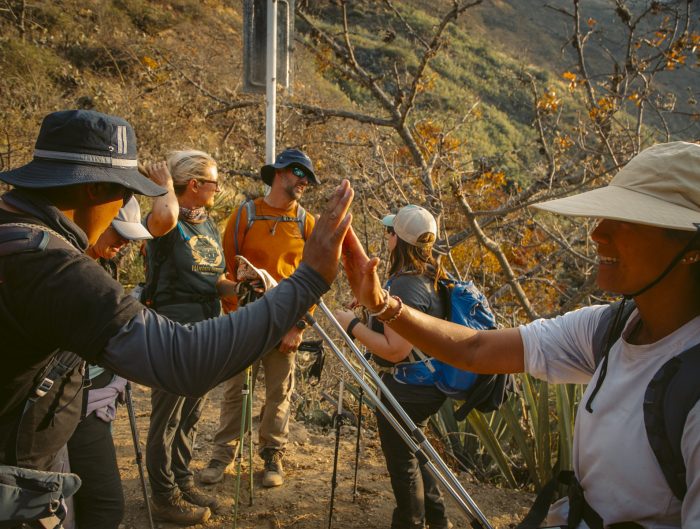
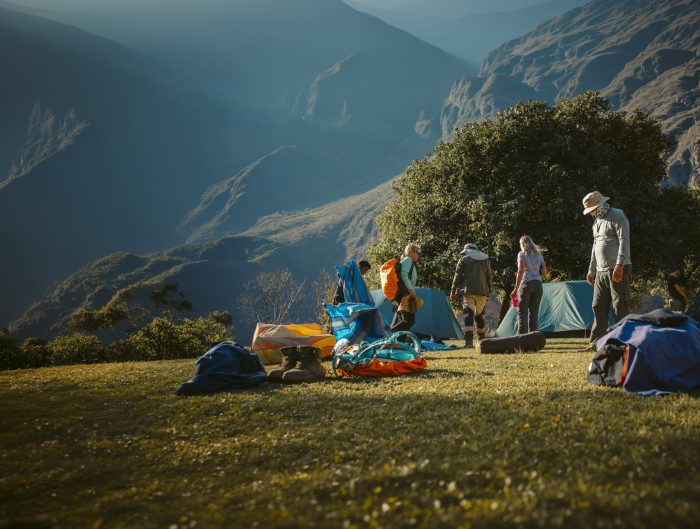
And because reaching it requires effort, and we mean real effort, it changes how the architecture impacts you. After days of walking, descending, climbing, and thinking you might be slightly mad for doing this, the terraces stop feeling like ruins. They feel like answers.
This is architecture that rewards patience and curiosity.
What This Architecture Tells Us About The Incas
Choquequirao proves that the Incas weren’t just builders. They were philosophers with chisels.
They believed:
- Land was alive
- Balance mattered more than dominance
- Function and meaning should never be separated
- Architecture could teach without speaking
Every stone reinforces those ideas, even now, long after the empire fell.
Seeing It In Person Changes Everything
Reading about Choquequirao is one thing. Standing there with tired legs and your mind wide open is another entirely.
This isn’t a place you stumble into between lunch and souvenirs. It asks for your commitment. Your time. Your curiosity. And a willingness to work for understanding.
For those who do, the reward isn’t just views or bragging rights. It’s perspective. The kind that lingers long after the trail dust is gone and you’ve put your hiking boots back into the attic.
And once you’ve walked through architecture that thinks, feels, and speaks, you may start looking at the rest of the world a little differently, too.

Leave A Reply